Social Media Safety Training to Protect Against Online Abuse
~ For Organisations and Individuals
It’s common for us to hear about polarising debate happening online. What doesn’t make the headlines as often, is the individuals who can unwittingly be caught in such debates, or suffer due to online abuse.
Social media creates enormous opportunities for organisations and the people who represent them. It helps us engage audiences, promote projects, build communities and share expertise.
But visibility can also bring risk.
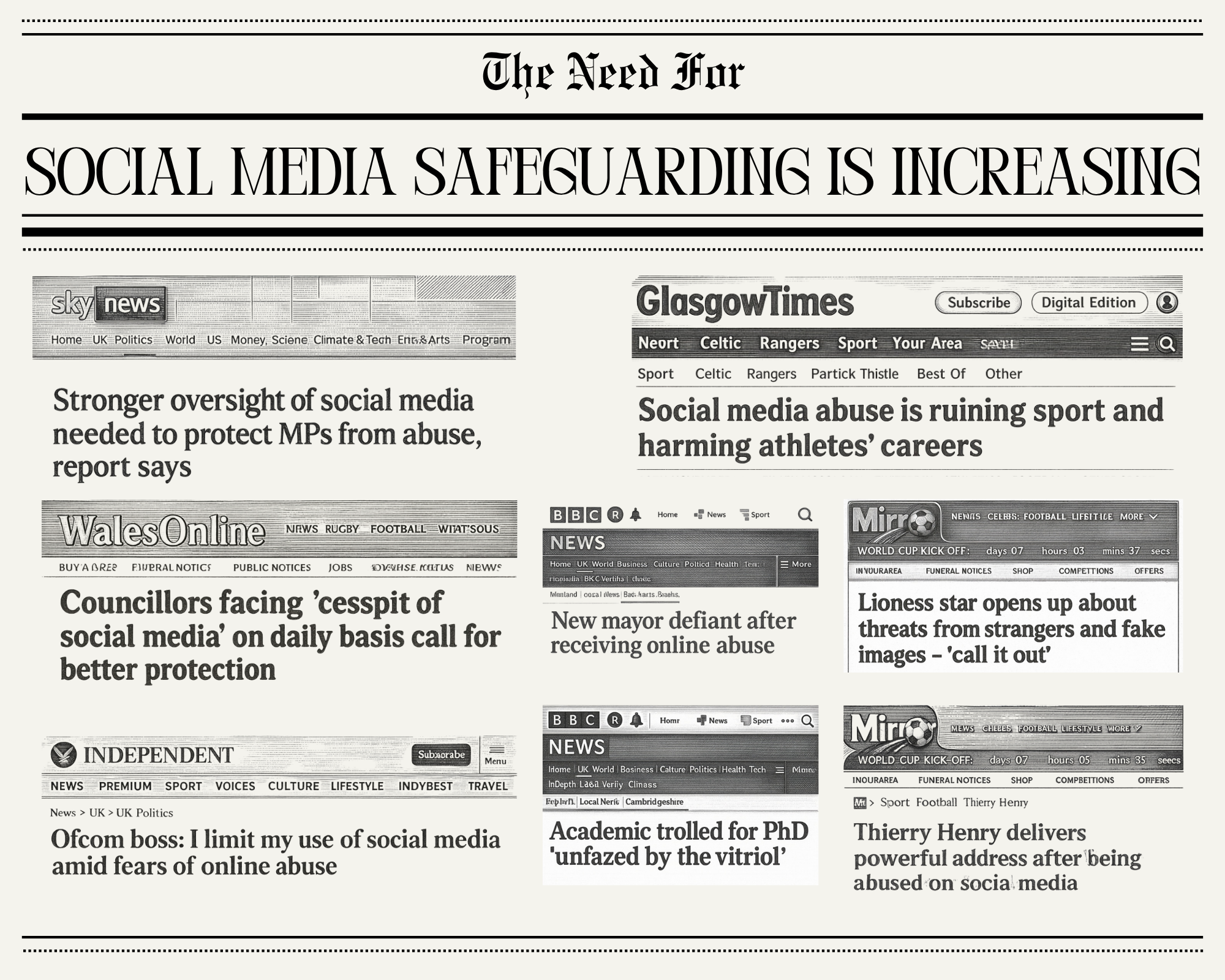
Whether someone is appearing in online content, in media interviews, speaking at events, publishing research or journalism, fronting a campaign, leading an organisation or simply managing a social media account, being publicly visible online can expose them to criticism, harassment and abuse. It’s true for your senior leaders, your staff and may even be true for contributors you’re not even paying.
It’s not just people who are on the digital frontline who stand to face attack either. Increasingly, people who have public-facing roles also fear online abuse – politicians and councillors, healthcare professional, the police, librarians, front-of-house staff, academics, sports people, journalists… the list goes on and on.
While anyone can experience online abuse, evidence consistently shows that some groups are disproportionately targeted. Ofcom research has highlighted the the disproportionate impact that online harms can have on women, people from minority ethnic backgrounds, LGBTQ+ people and disabled people, as well as children and teens.
For organisations, online abuse is no longer simply a communications tool or marketing avenue. It can become a reputational issue, a risk management issue, and critically a wellbeing and safeguarding issue towards their individuals.
Why organisations need to think about social media safety & online abuse
Many organisations invest in media training, communications planning and health and safety processes. Yet people are often placed in the public eye without receiving any guidance on how to:
Protect their privacy online
Secure their accounts and personal information
Reduce the risk of harassment escalating into real-world impacts
Respond appropriately, and look after themselves, when abuse does occur
Support colleagues who experience online attacks
Balance public engagement with personal safety
And nearly every project I’ve ever heard of goes ahead with no consideration for potential social media harms in their risk assessments.
In my experience, most people only start thinking about these issues after something has gone wrong. Of course, the better approach is to plan ahead.
Just as organisations conduct risk assessments before undertaking potentially challenging projects, they can also take practical steps to reduce the risks associated with public visibility online.
Social Media Safety and Online Abuse Training
I provide practical social media safety training for organisations, teams and individuals who may find themselves in the public eye as part of their work.
The training draws on my experience as a social media consultant, producer and former Head of Social Media for BBC TV, as well as my work supporting organisations whose staff, creatives, spokespeople and leadership teams engage with audiences online.
The aim is not to discourage people from participating online, but to help them engage more confidently, understand the risks, and take sensible steps to protect themselves, their colleagues and your business.
Most online abuse cannot be prevented entirely. But there is a great deal that individuals and organisations can do to reduce risk, improve resilience and stop online attacks from having a disproportionate impact on people's lives.
If you would like to discuss a social media safety workshop, or advice on protecting staff and contributors who operate in the public eye, I'd be happy to talk.